
For those interested in studying local history on the University of Toledo’s campus, the Ward M. Canaday Center is the premier place to be. Tucked away on the fifth floor of the Carlson Library, the facility features collections of university archives, documents, manuscripts and rare books, along with special exhibitions and a digital repository. Among the archives — both physical and digital — is the work of Arjun Sabharwal.
Sabharwal is a professor of library administration and a digital initiatives librarian at the Canaday Center, where he plays an important role in digitizing archival collections and creating virtual exhibitions that make historical information easily accessible to the public. Serving in this role since 2009, Sabharwal’s path toward archival work, however, was a unique one.
In college, Sabharwal originally pursued a music degree in classical guitar, which through various means introduced him to music history, musicology and ethnomusicology — subjects that eventually exposed him to archival research.
“I briefly joined a team to add content to the International Guitar Archive in 1993, and later I was a research assistant at [the University of Michigan], working on another early digital humanities project — “Relics” — which contained information on medieval manuscripts in Europe,” Sabharwal said in an email.
Yet another project that finally persuaded Sabharwal to shift towards archival work came when he served as faculty in the music department at Wayne State University.
“I undertook organizing the Wayne State University Folklore and Ethnomusicology Archive — one of the oldest in the U.S.,” Sabharwal said in an email.
From music to archives and from Ann Arbor to Toledo, Sabharwal now oversees the preservation of physical exhibitions through digital curation of virtual exhibitions. He also manages the university’s digital repository, which holds thousands of digitized items for the general public to view. Additionally, he manages the university’s open journal system, which houses four peer-reviewed academic journals that UToledo faculty oversee, and serves as the liaison to the departments of music, geography and political science for any research needs, information literacy instruction or assistance with collection development.
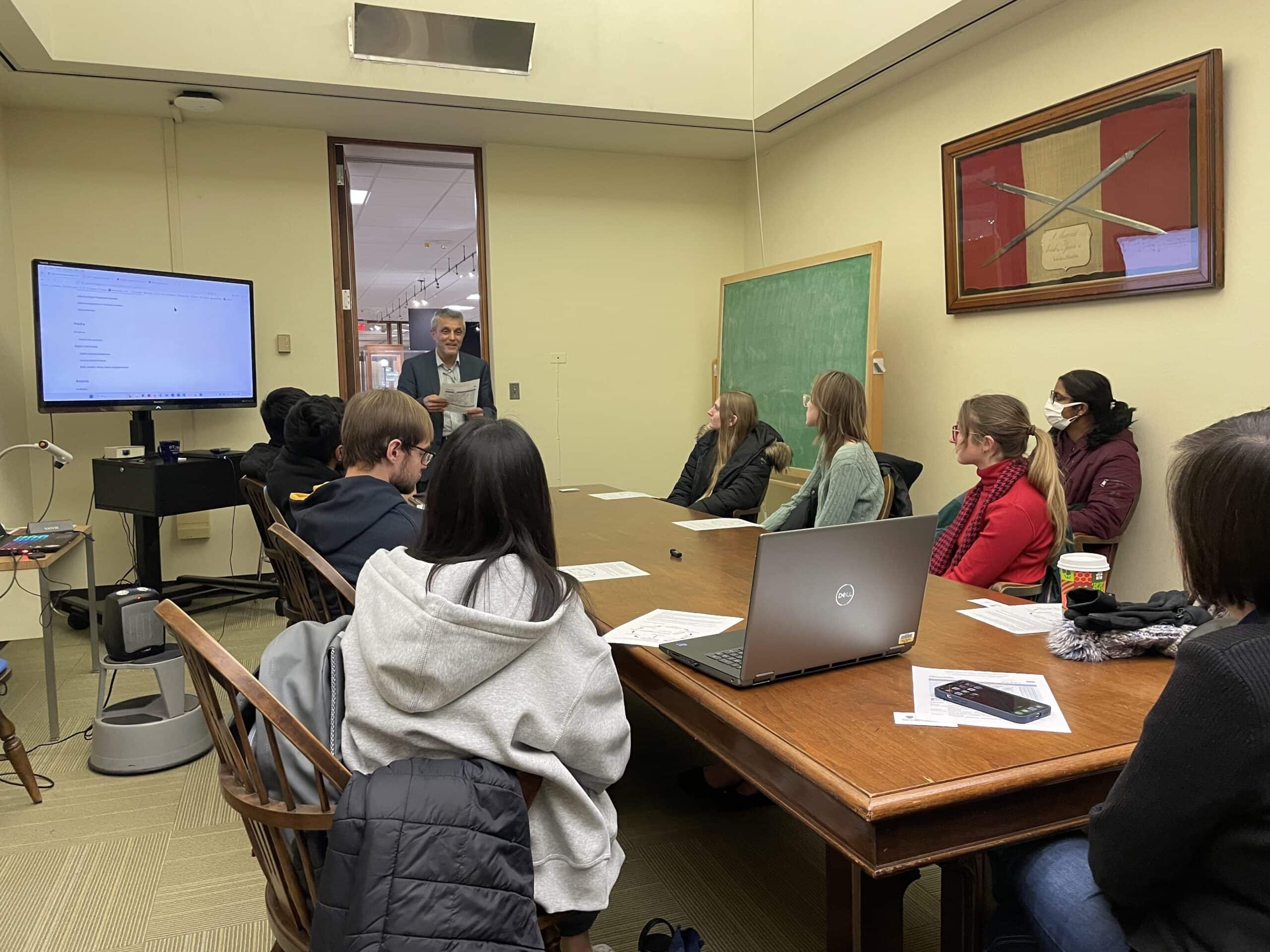
While many may think of dusty old boxes when digging through archives, nowadays with modern technology digitizing much of these physical materials, frameworks and models are needed for preserving even digital content and curating them in these forms, too. Sabharwal’s work shows how relevant digital archival work is in today’s technological age and he even published a book on this topic in 2015 entitled, “Digital Curation in the Digital Humanities: Preserving and Promoting Archival and Special Collections.”
Most recently, his work has also begun to incorporate innovation with artificial intelligence.
“I was appointed as AI Fellow and co-chair of the AI Task Force to move the university towards AI implementation. My research interests in [digital humanities] have directly contributed to exploring AI for archival and digital curation work,” Sabharwal said in an email.
Sabharwal’s archival interests also extend beyond the university.
“I am also the curator of Toledo’s Attic, [a] virtual museum which was launched in 1997 and will be reaching 30 years in 2027,” Sabharwal said in an email. “My work as co-chair of the Northwest Ohio Cultural Heritage Group and having judged for the Ohio History Day competitions have inspired me to explore new topics and new ways to improve the Toledo Attic’s site.”
Back at the Canaday Center, the most recent exhibit set up and collaborated on by Sabharwal is “Arrivals and Departures: A History of Transportation in Toledo and Northwest Ohio,” which focuses on Ohio’s transition from a small state with limited technology and transportation to a hub for all kinds of transportation advancements. It features a wide range of media, including historical photographs, rare books, videos, maps and timelines showing historic change in chronological order. It was created in partnership with Bowling Green State University’s Center for Archival Collections.
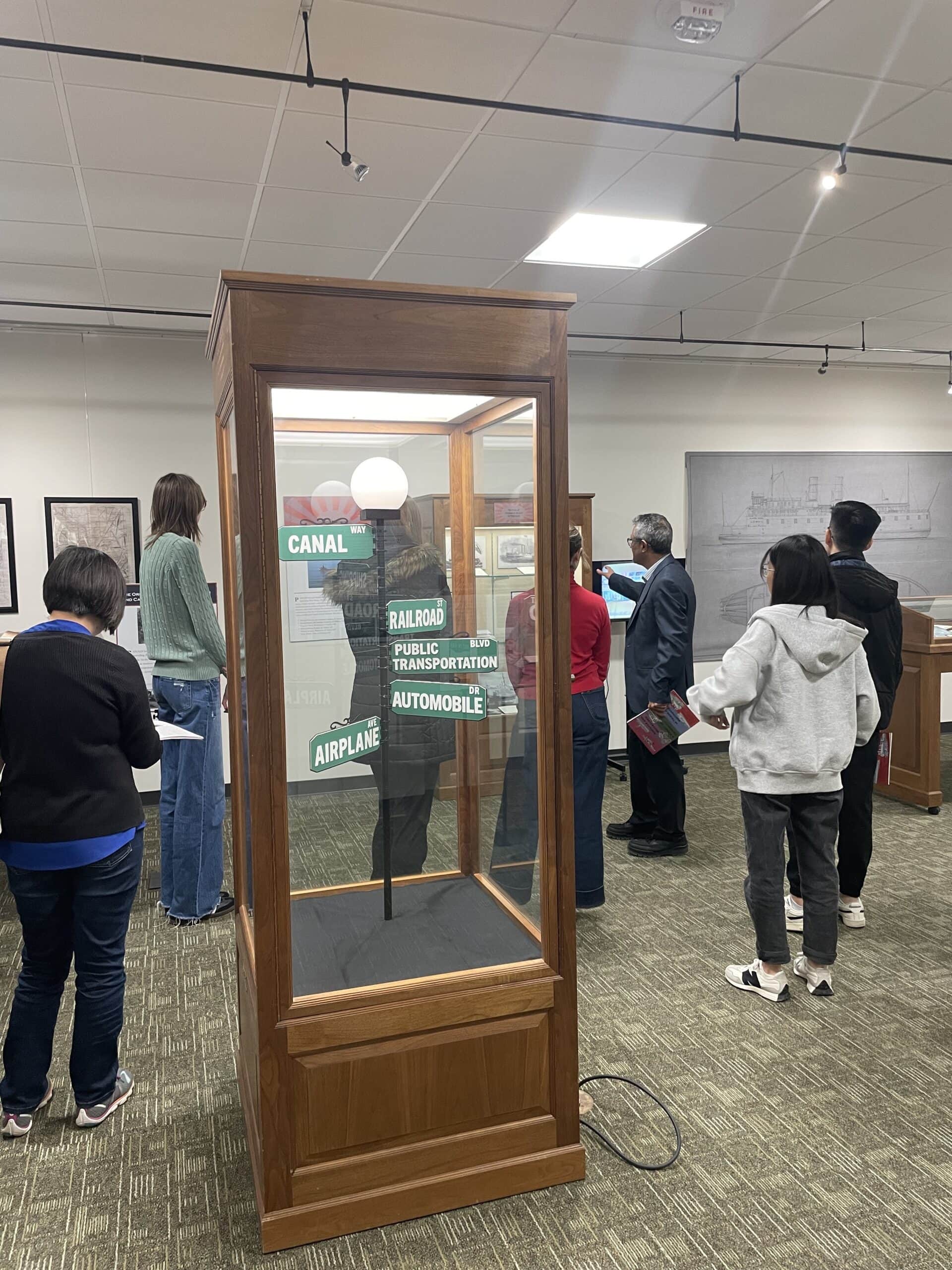
“The railroad area turned out to be huge, which is a testament about the significance and details available about the development of railroad[s] in northwest Ohio,” Sabharwal said in an email. “The region’s location at the crossroads between eastern and western regions of the country, north and south, and on the shorelines of [a] Great Lake made this region so important for commercial, industrial and social uses of railroads. Toledo has once been the third busiest railroad hub in the U.S.”
While the current physical exhibit will only be up through March 2026 when the next exhibit will take its place, Sabharwal ensures that all exhibits by the Canaday Center will live on in virtual form so that interested viewers can continue engaging with them for years to come.
“Our exhibitions at the Canaday Center have focused on regional history — be it medicine, literary history, commercial, industrial or social history, history of disability, social justice and global connections,” Sabharwal said in an email. “What the Canaday Center has done very well is to select and collaborate with other institutions and put unique records on display for visitors to see and learn about.”
Note: Responses from the interviewee were received by email and have been edited for grammar and clarity.