
Campus looks a little different these days, and that includes the presence of demolition crews and construction signs.
From a pedestrian bridge connecting the engineering and main campuses to the new multi-use Chessie Circle Trail, from four demolished residence halls to a new home for the University’s police department, UToledo’s 2017 multicampus master plan is well underway — with new $400 million updates to boot.
Approved in 2024, the new updates are set to be completed over the next five years.
“By concentrating improvements in the heart of campus, we can enhance campus vibrancy, encourage chance encounters and create spaces that support collaboration, engagement and a stronger sense of community,” Nicole Baden, university architect and director of campus planning, design and construction, said in an email.
Key projects in the campus core include razing Bowman-Oddy and Wolfe halls and relocating labs and classrooms into a new science building on the east side of Centennial Mall, as well as building an enclosed skybridge connecting the Student Union and Carlson Library.
“By focusing these improvements […] we can naturally increase opportunities for students to run into one another and spend time in shared spaces,” Baden wrote.
Hafeez Rahman, a senior dual majoring in electrical engineering and computer science engineering, echoes that viewpoint.
“These new renovations are actually for real connecting people, especially the glass bridge,” Rahman said.
The plan also introduces the “Rocket One-Stop,” a centralized hub for enrollment, advising and registrar services as the new Student Support Services Center. It is currently under construction as a connection to Scott and Tucker Halls.
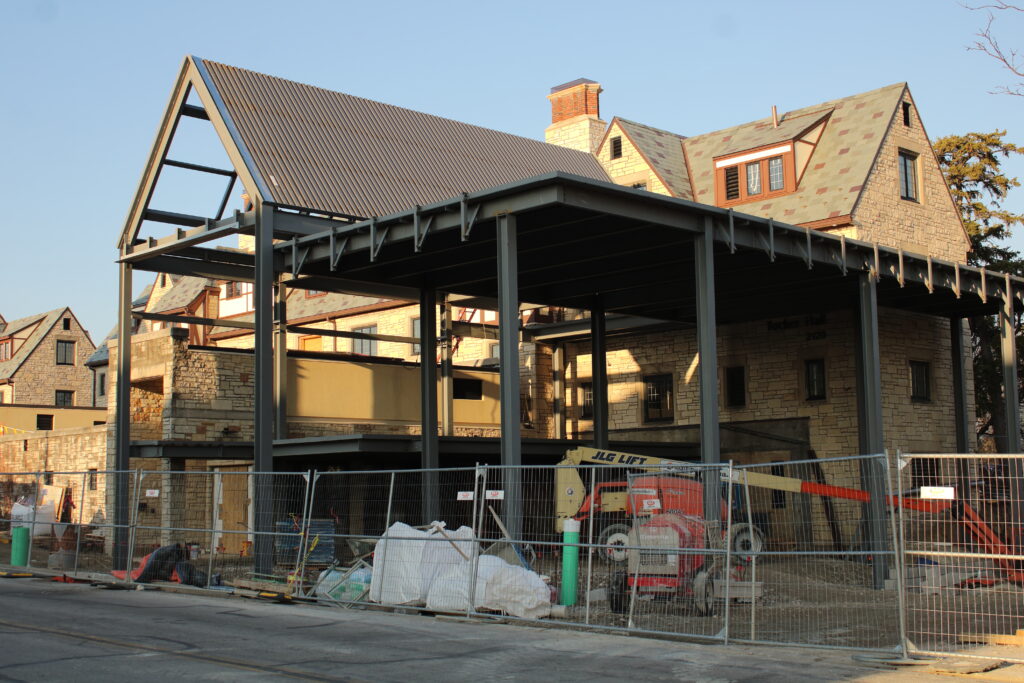
According to Baden, the goal of Rocket One-Stop is to “simplify the process of navigating campus resources and reduce the need for students to visit multiple offices across campus.”
“I think it’s a great idea because, also being an international student, we usually have lots of questions,” Reya Joshi, a computer science sophomore, said. “So, it’s easier to just go to one building and talk face-to-face if you have any inquiries or anything.”
The University is also working to create a more comprehensive Health Science Campus by relocating the Department of Exercise and Rehabilitation Sciences there and upgrading the Mulford Library.
While the library underwent a $1 million renovation in 2022 to incorporate more study cubicles and group spaces, Pharm.D. student Anthony Kmita agrees that the library could benefit from further improvements — especially for open, collaborative spaces.
“[On the fourth floor], there’s barely any tables,” Kmita said. “The fifth floor is a big open floor, but it’s supposed to be super quiet, so you can’t really talk. And the sixth floor [has] whiteboards with collaboration, but it’s tucked away and there’s no windows, no sunlight or anything.”
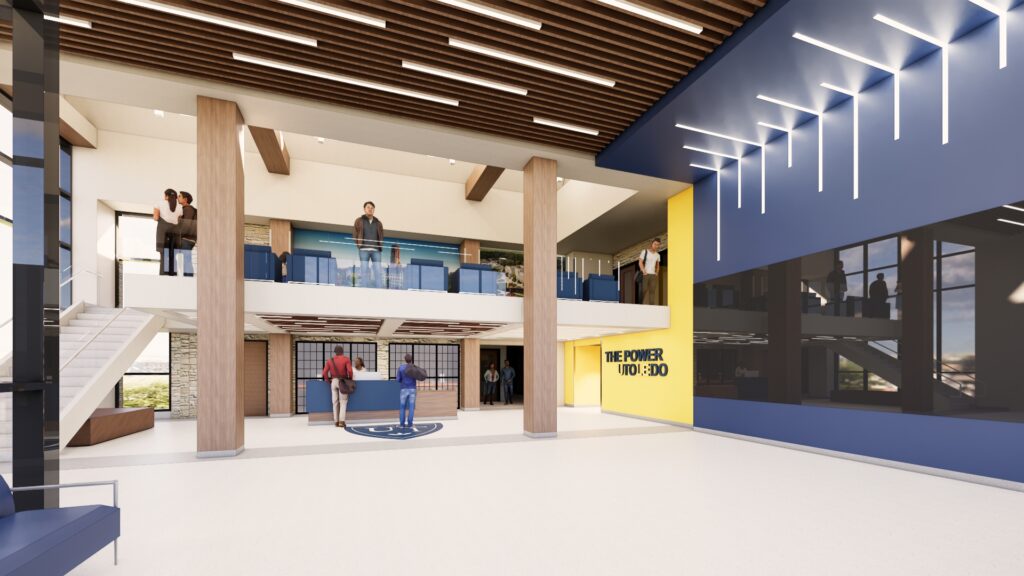
While $400 million can build significant infrastructure, Baden suggests the true achievement of the plan is hidden in the details.
“I think those thoughtful design choices are what will ultimately surprise people the most, because they make campus feel more vibrant, connected and enjoyable in ways that may not always show up in the headlines but will certainly be felt by the campus community,” Baden wrote.