
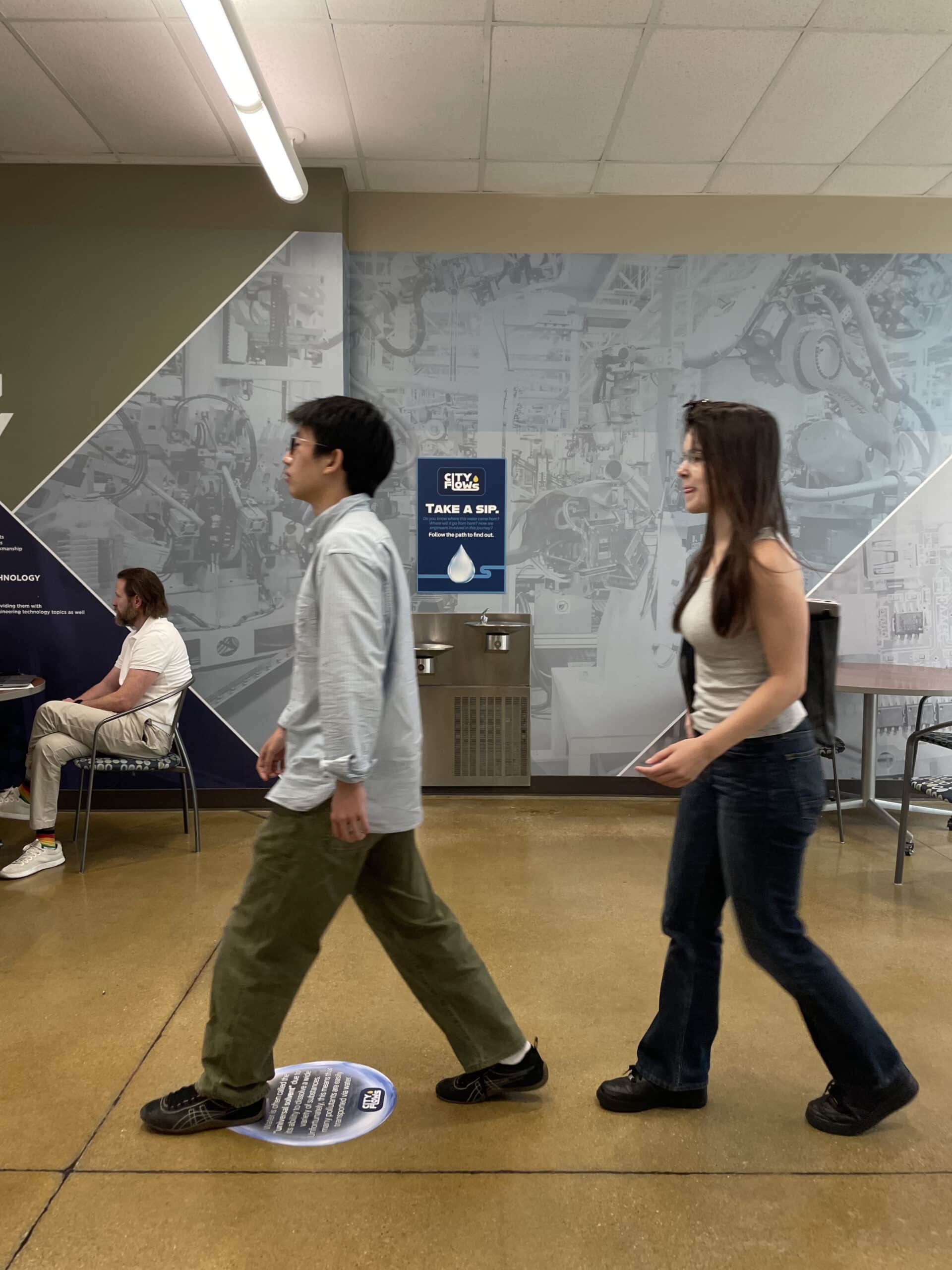
Stop for a sip of water in UToledo’s Nitschke Hall and you may notice a series of water droplets on the floor. Follow them, and you’ll find yourself in the midst of the hidden world of water and the pipes that transport it.
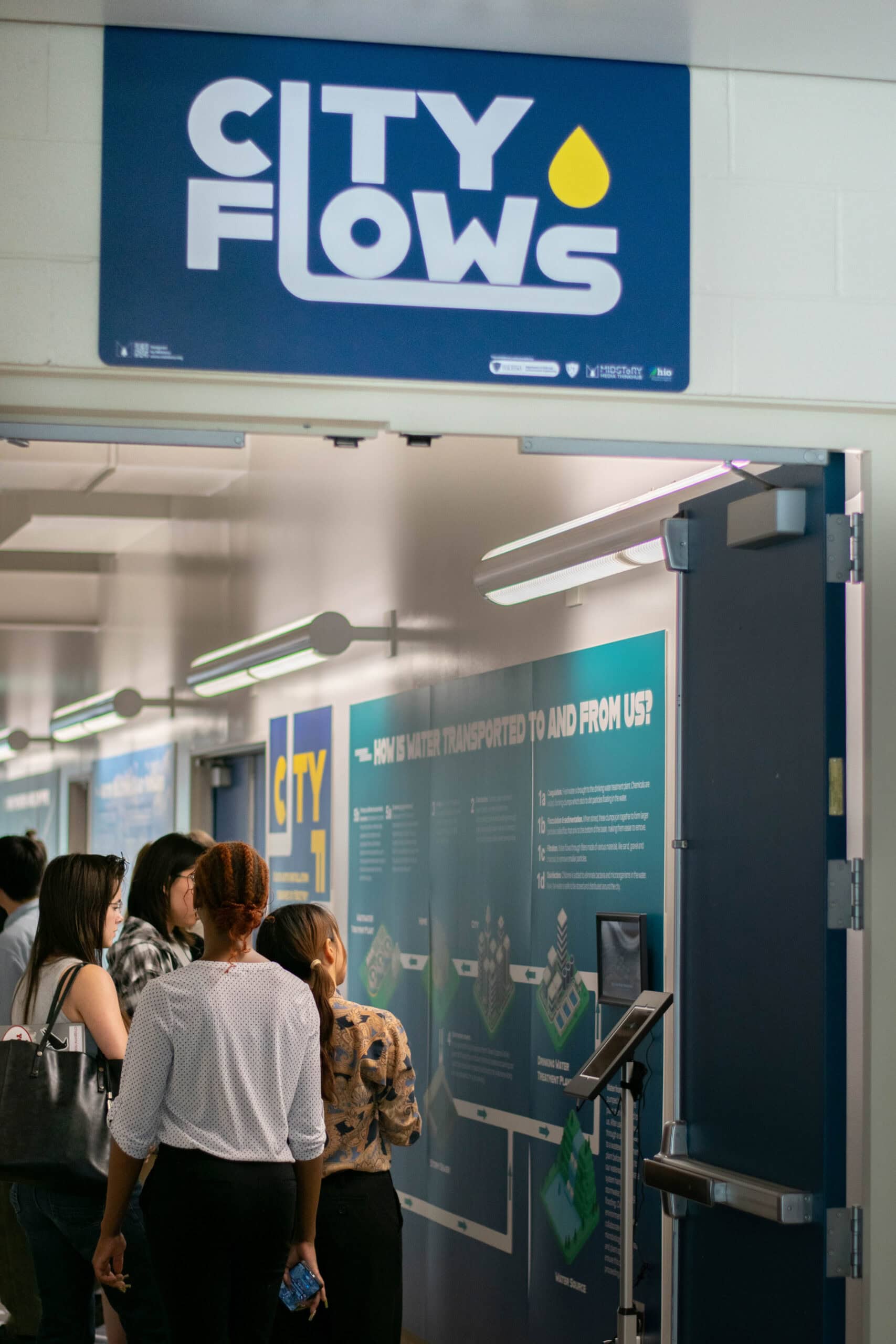
The new exhibit, “City Flows,” uses interactive displays and augmented reality to reveal the systems behind walls and underneath our feet that move water within communities.
The project was produced by the University of Toledo’s Department of Civil and Environmental Engineering and designed by Midstory, a regional nonprofit thinkhub, through a grant given by the Ohio Environmental Education Fund through the Ohio Environmental Protection Agency.
“Ohio EPA offers competitive grants for educational projects across the state, and we were very impressed by how this project was executed,” Anthony Chenault, public information officer for the Ohio EPA, said in an email. “Since the funding is drawn from half of the civil penalties from air and water violations in Ohio, we find it especially meaningful when a grant project teaches future scientists and engineers about how the latest technology in their field can be used to implement best practices and minimize pollution.”
Defne Apul, professor and former chair of the Department of Civil and Environmental Engineering, said that the exhibit was created to help give prospective students and visitors an interactive introduction to environmental engineering on campus.
“I wanted students to see that there are pipes out there that are bringing the water and that’s why you can get tap water, that’s how you can flush,” Apul said. “And I thought, well, how can we even show that to the students?”
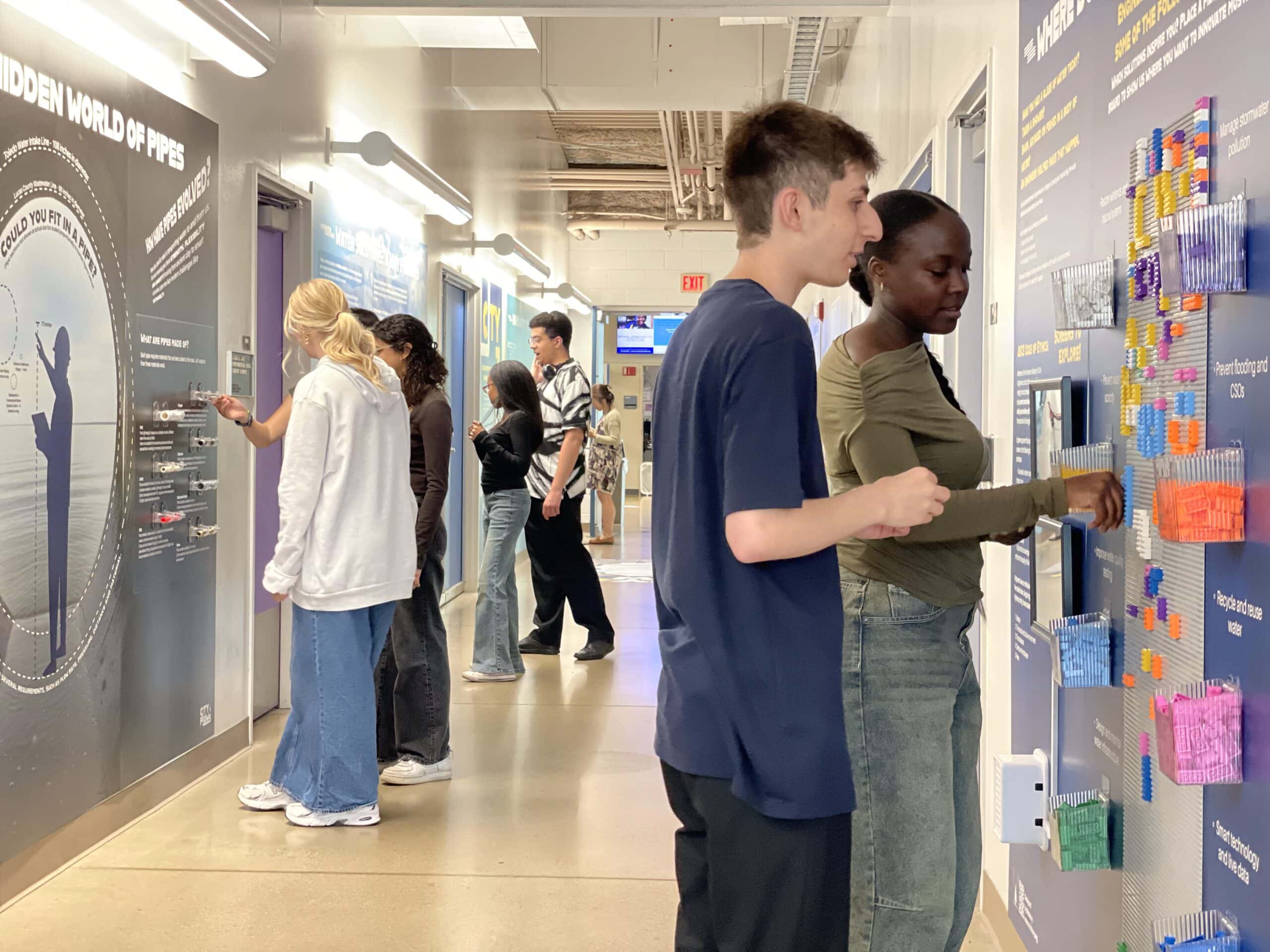
Apul said the concept had been brewing for many years before she wrote the grant proposal in 2024. The original concept focused on the augmented reality experience, but the partnership with Midstory helped bring it to life through the transformation of the hallway with a data arts installation. Visitors can explore water use in a “house,” interact with digital displays, touch pipe samples and even take a quiz at the end to test their knowledge.
Sam Chang, president and co-founder of Midstory, said that through this project, he hopes to make data and engineering accessible and engaging to everyone.
“We hope that our work can have educational value to help our community make better, data-informed choices. Our interdisciplinary approach brings together visual arts, multimedia, data analysis and technical science fields to craft stories that have lasting civic value,” he said. “We know that the University of Toledo is well known for its engineering programs, so it’s important that we continue to do things that push us outside the traditional box of what a university can do. Installations like this bring UToledo on par with top universities across the nation.”
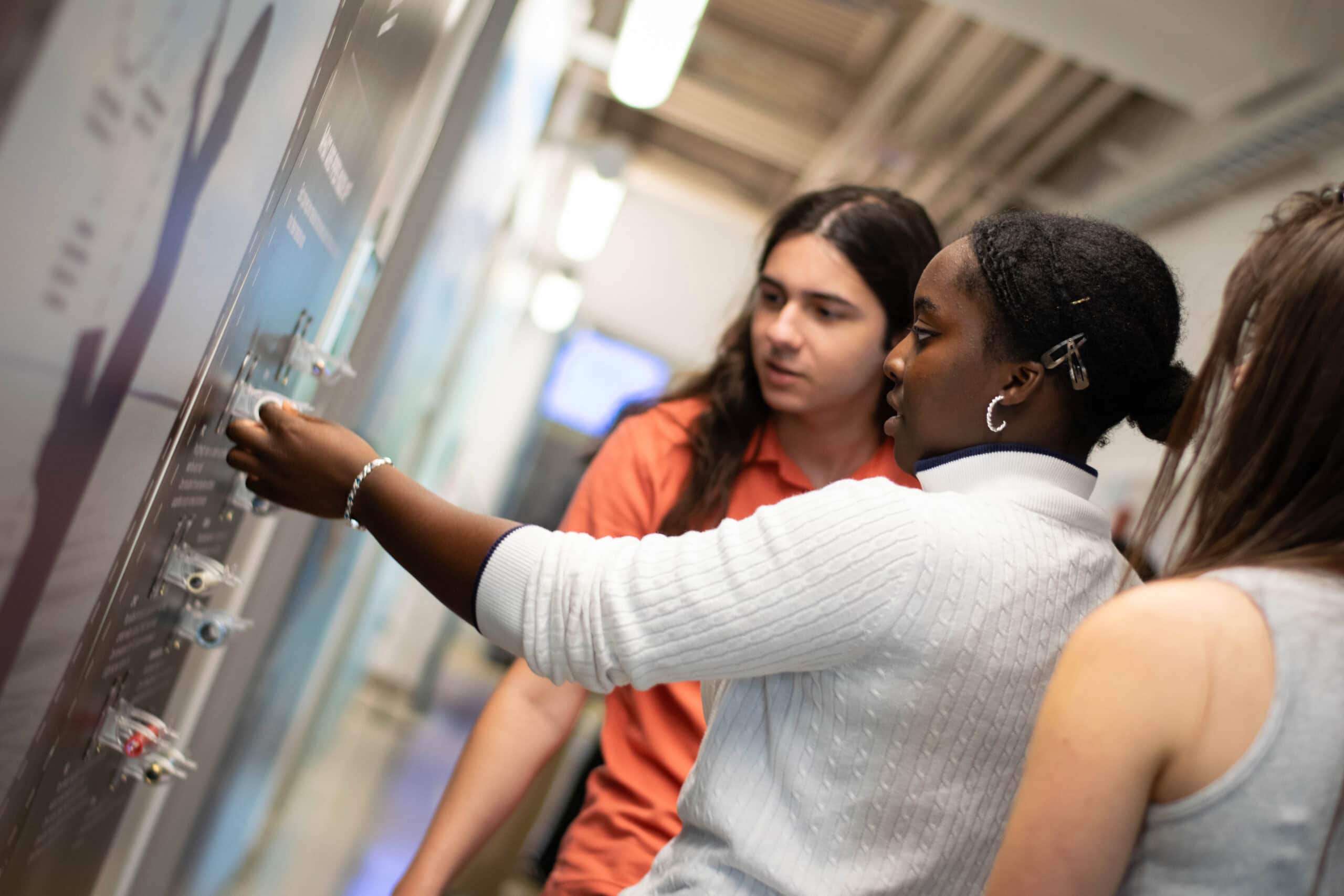
While the physical displays help visitors learn more about water systems, the augmented reality technology allows visitors to use an app to see some of the pipes and infrastructure hidden behind the walls at UToledo.
“I wanted them to learn more about the environmental engineering profession, and also connect it to their own personal lives,” Apul said. “I wanted to create something exciting that would make people come to Nitschke Hall as a destination because it’s so cool.”
Apul said she hopes that visitors of the exhibit develop a greater appreciation for this infrastructure that is a hidden but integral part of their everyday life.
The exhibit’s augmented reality portion is funded for five years, with expectations that both the digital and physical portions will remain in Nitschke Hall for at least that long. Apul said that she hopes this project can be an example for future collaborative exhibits on campus and in the Toledo community. Chang agrees.
“We hope this partnership is the first of many, and that you’ll see far more than just one hallway transformed on this campus in the future,” Chang said.
Explore the exhibit online: midstory.org/city-flows